How do I use Google Trends for business research?
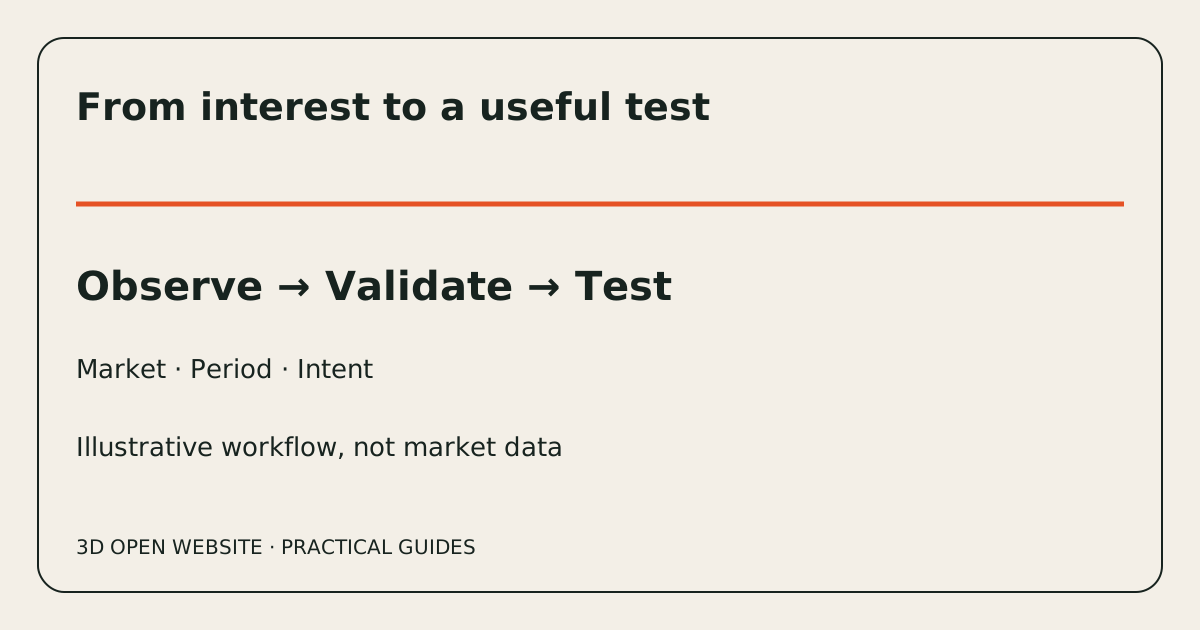
Use Google Trends to investigate how search interest changes, then combine the result with customer questions and business evidence. Its index is relative, not a count of customers or a forecast of sales. A useful research session ends in a testable decision, not a screenshot of a spike.
Set up one focused question
For example: should a Bulgarian service business prepare an explanatory guide before a recurring seasonal need? This is an illustrative research brief, not a claim about a measured market. List the phrases customers use, the audience, the service area and what you could actually deliver.
Follow the research steps
- Open Google Trends Explore for Bulgaria. Choose a term or topic deliberately.
- Use a longer period for context, then a shorter period to inspect recent movement. Keep geography, category and search type visible in your notes.
- Compare a small number of relevant alternatives under the same settings. Do not compare screenshots with unrelated scales.
- Read related top and rising searches and classify them as information, comparison, purchase intent or unrelated interest.
- Export the data where available. Record the URL, capture date, query spelling and filters so someone can reproduce the observation.
- Validate with actual enquiries, Search Console where available and a review of the search results before making a campaign decision.
What does a value of 100 mean?
Google scales interest within the selected context. A peak of 100 is not100 searches,100% of people or a percentage probability of purchase. A zero may reflect insufficient data. Low-volume fluctuations and sampling make small local niches especially easy to overinterpret. Use the official data FAQ before putting a numeric claim in a presentation.
Turn the observation into useful work
Write an evidence note with the observation, possible explanation, contradictory evidence and next test. A repeated informational question may justify a useful article; a commercial question may require a clear service page and a fulfilment check. A news spike unrelated to your offer may justify doing nothing. Continue with the campaign-brief framework; do not treat popularity as proof of margin.
Ready to Start Your Project?
Discuss your audience, services and enquiry process with our studio.
Get in TouchRelated Posts
How do I plan seasonal campaigns with Google Trends?
Compare several seasons, work backwards from customer lead time and build a campaign calendar with fulfilment and review checkpoints.
Google Trends: terms, topics and regions explained
Choose the right comparison unit and geography before interpreting a Google Trends chart, especially for Bulgarian and English research.
Does a breakout Google Trend mean business demand?
Check the cause, base, intent and repeatability of a rising trend before building content, buying stock or funding an ad campaign.